Join Online Spiritual Academy

Atman On Substack

ATMAN NITYANANDA - SUBSTACK
Walk the Path of Truth & Freedom

Help Atman's Mission to Flourish

Help Atman's Mission to Flourish
Greatfull for Your Support !
Showing posts with label Thought. Show all posts

Friday, January 10, 2020

Synthesis of the important aspects of living consciouly in the moment ~ Atman Nityananda


Synthesis of the important aspects of living consciouly in the moment

1. Remain alert, self-aware, self-observing.

2. Control the mind and the senses.

3. Recognize, accept, and become fully aware of the selfish tendencies, emotions, and mental and emotional patterns.

4. Avoid identifying or stopping identifying with thoughts, emotions, desires, feelings, impulses, behaviors, body, ego and external impressions and situations.

5. Calm the heart and mind and to restore the mind to its sattvic state.

6. Eliminate (reduce the power) of the selfish tendencies and negative emotions.

7. Stay in touch with and inner silent presence and deepen in it.

8. To discern our true nature from anything else that belongs to our apparent existence (body, ego, thoughts, emotions, desires, impulses, physical and energy reactions.).

Friday, February 26, 2016

Dissolution of desire-emotions-compulsive or mechanical thinking -Atman Nityananda


Dissolution of desire-emotions-compulsive or mechanical thinking

The experience of pleasure is converted into longing the longing into desire and passion and the desire to attachment and addiction. According the circumstances the desire modifies itself and assumes the form or expression of impatience, anxiety, anger, fear, disappointment, depression, frustration as well as all other negative emotions. All negative emotions are only modifications of the desire itself. The desire becomes for example anger in the same way that the water under certain conditions assumes the form of ice, or the milk modifies as yogurt.

There is no ego or egoism as something different from desire and the negative emotions together with pride (pride is also the desire to be and feel superior or special). Desire, pride and negative emotions constitute what we call ego which is a plurality and not a singularity as apparently seems to be.

Association, projection, imagination, identification, rajas and tamas are the factors by which the mechanism of desire functions.

Compulsive mechanical thinking is also caused by desire and the negative emotions (which as I said are only modifications of desire). If we dissolve the desire or the emotion then thinking will subside immediately. But it isn't so easy to dissolve the desire and the emotion directly, they are powerful.

How to free ourselves from desires and negative emotions

 Thus we must find ways or technics by which gradually we eliminate the desire-energy and the emotional energy. Each one according the maturity, the mental capacities, the constitution and the experiences must ajust the practices in a unique way.

According my experience the most effective way to dissolve the emotional and desire energy is to work with the emotions and the desire in three levels. From the body-vital energy level (which includes the physical prana and the psychic prana which is the energy of the emotions and desire) from the level of the mind  and intellect and from the level of awareness which is at the center of all practices.

Intense longing for liberation, faith, self-confidense, patience, determination, perseverance and diligent daily practice (dedication) are the necessary qualifications in order to succeed.

~ Atman Nityananda


Saturday, November 21, 2015

Is ego the ’I’ thought’ or the identification with thoughts? Atman Nityananda


Is ego the ’I’ thought’?

Some spiritual instructors refer to ego as the 'I thought. The say that ego is the 'I thought and the mind made story of 'me` is based or linked to this 'I thought. Is this true?

The made mind story of `me` is linked to the ego or `Iness` but ego is not the 'I thought. If ego was only a thought, the 'I thought, we were very fortunate because we could dissolve it, very easily, but this is not the case.

It is obvious that thoughts are symbols or mental representations of objects, situations, perceptions, sensations, emotions etc. For example the thought sea is only the symbol of what we call sea. The thought fear is the symbol of what we feel in our body as fear. It is obvious that the mental represantation (thought) is not the sea or the fear itself.

Similarly the ‘I’ thought is not the ego but only the mental representation of the ego. The ‘I’ thought is only the expression of the ego in the thinking mind, it is not the ego itself.

We use the word `I in order to communicate with others or to think about something, but this doesn`t mean that the ego is expressed because we use the word or the thought `I. In other lunguages like for example Spanish and Greek the word `I (which is `Yo in spanish and `Εγώ in Greek), it is not used or very rarely is used either for communication either for thinking. That means that the ego is expressed in them less? Of course not. The ego is not the `I thought. The ego functions in us almost always whether we use the word or thought `I or not. 

If the ‘I’ thought is not the ego, then what ego is? 

The ego is a mass or a field of energy which is crystallized in our psychic prana and in our mind. The sense, ‘I am the body’, or ‘I am a separate person’ is the strongest expression of this ego-energy together with lust and desire.


Desire, ‘Iness’ and pain-body are one and the same thing (the same energy field) - the so called ‘ego’- which apparently appears as three different things; the core of them is lust.

The egoism or ‘Iness” is experienced :
  • at the heart level, the chest and face as a strong sense,
  • in the thinking mind (Manas) as the ‘I’ thought and
  • in the intellect (buddhi) as the conviction or belief that ' I am the body', or ‘the body is me'.
The Ego takes many forms or expressions such as:
I am the doer, 
I am the enjoyer, 
I am the perceiver, 
I am the thinker, 
I am the feeler, 
as well as takes the form of desire, like-dislike, anxiety, fear, stress, attraction-repulsion, anger, irritability, impatient, discontentment, aggressiveness, self assertiveness etc. which are only modifications or forms of the ego-energy and Eckhart Tolle named all these wonderfully as pain-body. ( See image).

"Wherever there is ego, there are mineness, selfishness, likes and dislikes, lust, anger, greed, hypocrisy, pride, jealousy, delusion, arrogance, conceit, impertinence, Vasanas, Trishna or cravings and Vrittis or Sankalpa, clinging to this earth-life (Abhinivesha), agency, doer (Kartha) and enjoyer (Bhokta)."
~ Swami Sivananda

Is the ego the identification with thoughts?

When there is identification there must be two factors involved, the subject and the object of identification. When we say that ego is the identification with thoughts we are not mention what identifies with thoughts.

So the idea that identification with thoughts is the ego cannot be accepted as true because does not make reference to the very thing that identifies with thoughts.

Then what identifies with thoughts?
It is the ego what identifies with thoughts, body, sensations, objects etc. The very nature of ego is to identify with something.

"From ignorance) Avidya came ego or egoism (Ahamkara), the self-asserting principle. The function of ego or egoism is identification (Abhimana).  Dehabhimana (is identifrcation with body, -it is mistaking the body for the Self or pure Atman. It is identification and attachment to the body), Shastrabhimana (it is identification with scrtures),  Desabhimana (it is identification with country);  these are varieties of identifications of ego." 

"This ego identifies itself with the body, mind, Prana, the senses."

 ~ Swami Sivananda


Identification, projection, superimposition and imagination are the functions of ego and due to them hypnotizes us and uses our mind intellect, senses and body for its own sake.

~ Eckhart Tolle
"Since the ego is a derived sense of self, it needs to identify with external things. It needs to be both defended and fed constantly. 

The most common ego identifications have to do with possessions, the work you do, social status and recognition, knowledge and education, physical appearance, special abilities, relationships, personal and family history, belief systems, and often also political, nationalistic, racial, religious, and other collective identifications.

 None of these is you." ~ Eckhart Tolle 

Conclusion: 
The ego is not the identification with thoughts but ego is what identifies with thoughts, body, object, persons, country, religions, etc.

Ego is the veil between God and the soul. When the ego vanishes, then is the realisation of universality or cosmic consciousness. Egoistic assertion is a terrible disease. It separates you from God and your fellowmen.  
- Swami Sivananda  

The main expressions of the egoic energy are: 

1. Identification with the body. The strong sense that ’I am the body’ or’ the body is me

2. Desire for sense pleasure (mainly for sex, food, drink, and sensual objects in general), possessions (money etc.), power, fame and name 

3. All pairs of opposites: Like-dislike, attraction-repulsion, fascination-disappointment  etc.

4. All psychological disorders or defects such as fear, anger, jealousy, envy, impatience, depression, hypocrisy, hatred, etc. The negative energy which is stored in our vital body Eckhart Tolle calls it Pain-body. 

Burn this ego, through discrimination,  Atmavichara (enquiry into the nature of Atman- the Supreme Self) and Samadhi.  

Slay egoism - your arch-enemy - through self-sacrifice, self- surrender, self-denial, service, humility, prayer, worship and identification with Atman. 

You will enjoy the immortal bliss of the Eternal !

 - Swami Sivananda  


Wednesday, November 4, 2015

Freedom from Samskaras and vasanas leads to liberation / by Atman Nityananda

AMMA meditating
Freedom from Samskaras and vasanas leads to liberation

Bondage is due to accumulated vasanas and samskaras in the chitta (subconscious mind), and freedom is the dissolution of all samskaras and vasanas.

When the chitta is free from vasanas and samaskaras, the light of consciousness reflects unobstructed in our buddhi and we experience the bliss and peace eternal. We are free from suffering and birth and death.

The whole process of yoga is to free our chitta (subconscious mind) from all egoic tendencies (vasanas and samaskaras) and keep the mind focused in its source -the silence space within; a concentrated mind in its source is meditation.

But in order to free our chitta from the already accumulated in it vasanas and samaskaras is also necessary to stop create new vasanas and samskaras. If we continue to create new vasanas we will never be free from bondahe and delusion.

Thus one of the most important goals in yoga is to develop our capacity to stop the creation of new samskaras and vasanas.

Vasanas and samskaras are produced in the chitta due to identification, projection, imagination, superimposition. If we want to stop this perpetual process of creation of new vasanas then we must learn not to identify with thoughts, emotions and external objects. We must learn keep our mind introspected and aware of the silent space within. We must develop in the highest degree our capacity of discrimination (viveka) and dispassion (vairagya) viz. indifference for sense objects.

As long as we are thirsty to experience sense pleasures it is impossible not to identify with the objects, thoughts and emotions. As long as we identify with them new samskaras and vasanas are created and our bondage and delusion continue and thus profound meditation and self-realization are impossible.

Intense Dispassion can be cultivated only when we have cultivated discrimination in a high degree through, satsang, study of sacred texts, reflection, contemblation, self-enquiry, observation, Japa nama, purification, devotion, holy company, selfless service or work done without the expectation of fruits and without egoism.

It becomes obvious that we have developed discrimination highly when we see in sense pleasures only pain and suffering. The highest degree of discrimination is to see only Brahman or consciousness as real and all else as unreal. If we still believe that we can find happiness in external objects and that we can have pleasures without to experience suffering our Buddhi is still deluded by lust and desire.

With the aid of discrimination and dispassion, self-awareness and control of senses and mind we must stop identification and the production of new samskaras and vasanas. We must cultivate the witness attitude and remain always rooted in the silence within.

Then and only then gradually we can free ourselves from the clutches of the ego and experience the peace and Bliss of our true Self or Atman which nature is Satchitananda (Existence- consciousness-bliss absolute).

~ Atman Nityananda

~~~~~~~~~

Effective Pratyahara Stops the Creation of New Samskaras and New Vasanas
by Swami Chidananda

When Pratyahara is practised in such a comprehensive way, then gradually the outer world starts to lose its hold upon the mind of the Yogi. Outer objects and their names and form appearances lose their power to influence and change the mind of the Yogi. 
The Yogi retains his spiritual consciousness and awareness in the midst of the objects and in spite of the objects. That is effective Pratyahara. That is success in Pratyahara. It results now in a great game when, thus established in proper Pratyahara, the Yogi reaches a stage where new Samskaras and new Vasanas are no longer created. Otherwise, the creation of new Samskaras and new Vasanas is a perpetual process. There is no end to it. Normally, as you move in the outer world, you go on creating newer and newer Samskaras and Vasanas. It poses a serious problem to the Yogi. He has difficulty enough in trying to deal with the Vasanas and Samskaras already brought over from his previous birth. And he cannot afford to add on to it a further difficulty of having to deal with fresh Samskaras and Vasanas. 

The point to note is that unless you live like a Yogi, it is impossible for you to avoid creating more and more, newer and newer, Samskaras and Vasanas. 
The Yogi is able to put a stop to this process of the creation of additional new Samskaras and Vasanas, precisely by the practice of successful and effective Pratyahara. In his case, the perceived objects do not impinge upon the consciousness any more. They pass off like shadows. They do not take root. They do not go and lodge themselves in his Chitta (subconsciousness). 

Pratyahara thus wards off the creation of new Vasanas and Samskaras, and through the help of Viveka, Vichara and Vairagya, turns the mind away, and the mind becomes gradually transformed into a Yogic mind, an indrawn mind, an Antarmukha Manas (introspective mind)..

The inveterate tendency of the previous mind to habitually always be running about hither and thither, that innate previous tendency gives place to this newly created nature and quality of remaining inward, of moving towards its own inner centre. That is a great achievement. That is a vast stride, much ground cover and it is this indrawn mind that is the hallmark of the Yogi. It is a specific quality of the Yogic mind to be at repose within and the ground is now prepared for taking advantage of this state of the mind and making use of this indrawn mind to concentrate and focus on the great Lakshya, the Dhyana Lakshya (the object of meditation), the object of Yoga. 

What is Yoga ultimately? Yoga is nothing but meditation and it is the indrawn mind that becomes the fit instrument for such meditation. 

One who has succeeded in practising Pratyahara becomes a person with Samahita (steady) Chitta, a person with his mind brought under control, a person with a subdued mind. And this subdued mind is a prerequisite for meditation. Where there is Asamahita(unsteady) Chitta, there cannot be any real Dhyana (meditation). This is what all the scriptures say.

Wednesday, October 14, 2015

OM! THE VITAL SHEATH & THE VITAL EGO / Atman Nityananda


THE VITAL SHEATH & THE VITAL EGO 
 
In the vital sheath lies the core of our suffering and the difficulties in spiritual development
Although it is very common to read or hear that the main cause of our suffering is our thoughts or our thinking this is not the core of our problems. The impure vital is the core factor of our problems and what creates delusion and suffering. The vital is the unconsious, mechanical, compulsive part of ourselves which cause unbalances, disharmony, dysfunction and suffering.

The mind and intellect are victims of the impure and undeveloped vital which uses them as its instruments to achieve its goals; due to the dense and negative vibrations of the vital energy which flow in the mind and intellect the mind and intellect lose their clarity, sharpness, luminosity, concentration, serenity, tranquility and the higher capacities of pure reason, understanding, discernment, intuition are obscured highly.

The mechanical compulsive thinking, (the noise in the head), the negative thinking, abusing, complaining, justifications, the daydreaming and imaginations are all the mental expressions of the vital impulses, emotions, desires,  etc.. The mental vital* (according Sri Auronindo the vital has 4 parts) is the part of the vital that 'translates' all vital formations into mental forms, (thoughts, imaginations, concepts).Of course desire is the central expression of the vital (the core desire is the sexual) and all other vital expressions are related to it (desire).

It is important always to remember that all different levels and parts of our existence are interconnected and the dysfunction of one affect the proper funcioning of others.   The body, the vital force (physical and psychic prana***), the senses, the manas (external mind) and the buddhi (intellect-intelligence)  are interconnected. We must use all wisely, with moderation and common sense  maintaining the balance at all levels in order to enjoy good physical and psychological health and grow up spiritually.


Most of us are dominated by the vital body and its deep-seated urges that are necessary for us to remain alive. It is also the home of the vital or subconscious ego which holds the various fears, desires and attachments which afflict us. We most of us spend our time in life seeking enjoyment through the vital in the form of sensory enjoyment and acquisition of material objects.
~ David Frawley

 The false interpretations of the mind about what happens in the external and in ourselves are also caused by the impure vital because clouds the higher capacities of the intellect as well as obscure our intuitive capacity and the expression of our inner heart which is the instrument of the soul.

 It is well known to all of us what happens when anger is activated and expressed in us. The vibrations of anger reduce or cancel totally our capacity of reason, discernment, memory and understanding. We think, we say and we do things for which later we regret. The same happens when our mind is under the influence of sexual passion, gluttony, greed for money, power, fame and position, pride, jealousy, hatred, fear, etc.. These vital-emotional formations determine our way of thinking and also impregnate the thoughts with their dense or negative vibrations. Thus when for example we are under the dominion of gluttony we imagine delicious plates, we make plans to get them and we already in the vital-emotional plane we experience the pleasure we expect to derive from them. The same happens when our mind is dominated by sexual lust which is the strongest one; researches have shown that  during the day in  the mind of people arise many times sexual thoughts (of which they may be unconscious in many cases).

It is quite difficult especially in the beginning of our spiritual journey to be conscious of the vital formation that is in play by direct observation of it. Keep in mind that the vital ego doesn´t like to be revealed and be known by our conscious mind because this will be the beginning of its end. But we can be aware of it by being aware of the kind of thoughts that we entertain in our mind. That is to say that if we think about food probably our mind is dominated by gluttony. Certainly it is not always the gluttony behind the thoughts about food but in most cases is.  It is relative easy to realize the vital impulse in relation with sex and food but it becomes more difficult when behind our thoughts is the jealousy, the pride, the inferiority, the law self-esteem, the vanity, the arrogance, the greed etc. That´s why we must every day to investigate, analyze and scrutinise our thoughts and emotions in order to find out the deeper motives of our thoughts, words and actions and little by little by proper means and technics, steady determination and will to disolve them from our psyche.

When the vital ego is active, dominates the mind we become victims of its appetites. The vital formations cloud our intelligence and use the thinking mind and the intellect for its own sake.
Unfortunately the majority of earthlings are dominated by the unconscious vital impulses, desires, ambitions and emotions; thus they live an unbalanced, miserable, unhappy life with trifling moments of pleasure, satisfaction, exhilaration and happiness and have created a chaotic external reality full of exploitation, violence, wars, environment pollution, diseases, poverty and slavery.

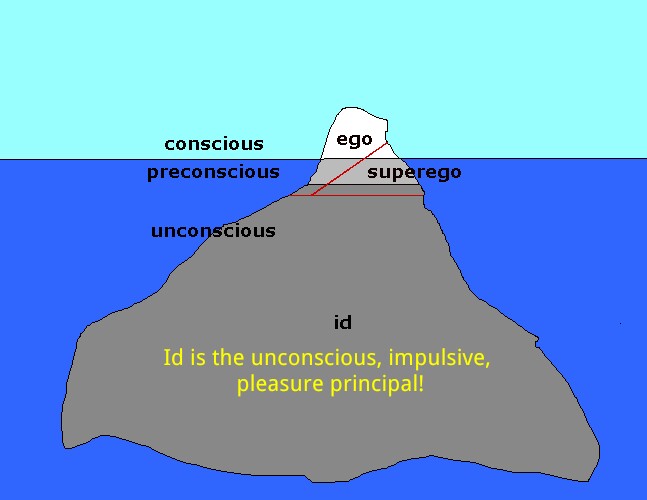
(The majority of spiritual teachers refer to it as the desire-mind and as the emotive or emotional mind. Dr. Freud mentioned to this as the unconscious part of our psyche  and named it Id**). Sri  Aurobindo call it the vital being and spoke with details  about the  nature of the vital* and the necessity to purify it).

It is the impure vital the main factor that causes mental dysfunctional and any kind of disturbances, unbalances, diseases and failures, not the thinking mind or the intellect by themselves. It is the impure vital that hypnotizes and dominates the mind and intellect and uses them for its own illogical and in most cases destructive appetites and desires. The pure vital is a good servant but the impure is a disastrous master.

The vital under the influence of excessive rajas and tamas gunas in our astral body and mind becomes brutal, uncontrollable, dominates the mind and obscures the optimal function of reason and discernment, clouds our understanding and comprehension, weakens our will-power and thus uses us as puppets. The tamas guna creates a veil which hides of our conscious mind all these games of impure vital and the rajas guna distracts and extroverts the mind and makes it seek always in the external world ways to satisfy the thirst of the impure vital for power games, sensual gratification and pleasure. 

Thus one very important part of our sadhana in order to purify the vital and of course the mind is to increase the sattva guna and decrease the tamas and rajas gunas. The main way to achieve this is to avoid tamasic actions, habits and impressions at the maximum degree, to avoid as much as possible rajasic actions, habits and impressions and increase the sattva-rajas and sattvic actions, habits and impressions.

The mechanical, compulsive uncontrollable thinking, the illogical thinking, the illusory full of imagination thinking are caused by the vital impulses and demanding. All exaggerations, disharmonious actions, conflicts, abuses, the brutal, violent, inhuman actions, wars etc.are also prompted by the impure vital. 

The impure vital makes the intellect dysfunctional and a servant of its desires and passions. The confusion and misunderstandings that have most of seekers about spiritual matters happens mostly due to the impure vital which does not permit the intellect to function with clarity, sharpness and preciseness as well as obscures the pure reason and discernment, 

It is not possible to control the thinking mind (manas) and free the intellect from vital disturbances and have progress in meditation if we do not purify the vital  of which the energy, the contribution and  cooperation is necessary in order to advance in spirituality. We need a lot of energy to do sadhana and a pure vital that cooperates with us is of a great importance. This purification of the vital is a great and difficult task but there is no other way. Otherwise the vital will always undermine and cancel our efforts to control the mind and grow in meditation and to achieve self-realization. But not only our sadhana suffers from the impure vital but we also suffer failures, problems, and conflicts of any kind in our daily life due to its imaginations, illusions, desires and ambitions.

Daniel Goleman mentions in his  conference (emotional intelligence) an experiment with young children. The results of this experiment have shown with clarity that the children which had a greater self-control over their vital-desirous part they had in the long run a much greater sucess than the weak ones.    https://youtu.be/TgB-3xHZKQk  18' min. 

When the vital is impure one part of ours goes towards God and the vital part drive us in the opposite direction. We may have a good understanding about what is beneficial for us, about the spiritual path and the necessity of spiritual practice and yet the vital can insist in its own ways which are in the opposite direction and impede our spiritual progress.
 The vital resists and reacts in many ways in order to undermine all our efforts we make to succeed in meditation and self-enquiry and its final goal is to make us abandon the practice. No real progress in meditation is possible if we are not capable to subdue and purify the vital ego which as a 'monster' wants always to govern our mind, body and senses in order to satisfy its lower appetite for pleasures and feed itself with negative emotional vibrations.

Due to this impure vital most of the seekers after truth abandon the spiritual sadhana after sometime, or they may continue to follow a path or a teacher but without to make any real effort to eliminate the egoic self and realize the truth and in some cases they become very strict with others.

NOTE:

Sri Aurobindo
Vital*: According Aurobindo the vital is the life-force acting in its own nature, impulses, emotions, desires, ambitions, etc., having as their highest centre what we may call the outer heart of emotion, while there is an inner heart where are the higher or psychic feelings and sensinilities, the intuitive yearnings and impulses of the soul.

The vital proper has four parts: 


The mental vital which gives a mental expression by thought, speech or otherwise to the emotions, desires, passions, sensations and other movements of the vital .
The emotional vital which is the seat of various feelings such as, love, joy, sorrow hatred and the rest.
The central vital which is the seat of the stronger vital longings, and reactions e.g. ambition, pride, fear, love of fame, attractions repulsions, desitres, passions of various kinds and the field of many vital energies.
The lower vital which is occupied with desires and emotions such as make the greater party of the daily life e.g. food desire, sexual desire, small likings and dislikings, vanity, quarells, anger at blame, little wishes of all kind and a numberless host of other things.

Their respective seats are:
Mental vital the region from the throat to the heart.
Emotional vital its seat is the outer heart and the inner heart behind it it is related with the soul.
The central vital has as its seat the region from the heart to navel.
The lower vital below the navel.

We must not confuse the mind with the vital although the vital has a mind element transfused in it. Mind and vital are mixed up on the surface of the consciousness, but they are quite separate forces in themselves.

The mental vital is a sort of mediator between vital emotion, desitre, impulsion, etc and the mind. It expresses the desires, emotions, feelings, passions, ambitions, possessive and active tendencies of the vital and throws them into mental .- the pure imaginations or dreams of greatness, happiness, etc. in which men indulge are one peculiar form of the mental vital. It is through the mental vital that the vital passions, emotions, impulses, desires, rise up and get into the buddhi and either cloud it or distort it.


Id**. According Freud the id is the impulsive and unconscious part of our psyche which responds directly and immediately to the instincts including the sex (life) instinct.


It operates on the pleasure principle, which is the idea that every wishful impulse should be satisfied immediately, regardless of the consequences.


The id demands immediate satisfaction and when this happens we experience pleasure, when it is denied we experience ‘unpleasure’ or pain.

The id engages in primary process thinking, which is primitive illogical, irrational, and fantasy oriented.

Physical and  Psychic Prana*** (functions)

Physical Prana


Physical Prana is life-energy acting in support of the physical body in various functions such as digestion, assimilation, etc.

Prana: concerned with inspiration and expiration of the universal Breath, with the chest as its normal base of operation. It brings in the fuel.
Apana: engaged in the expulsion of what is not assimilated or not necessary in the system. It functions below the chest. 
Samana: is concerned with digestion of what is taken in and has its seat in the stomach. It converts fuel into energy. Prana and Apana meet together near the navel and create samana. It regulates the interchange of these two forces at their meeting-place, equalizes them and is the most important agent in maintaining the equilibrium of the vital forces and their functions.
Vyana: regulates both the Prana and the Apana and keeps them in harmony, the breath which sustains when prana is held in abeyance as in actions requiring effort. It is all-pervasive, distributes the vital energies throughout the body.
Udana: It governs the positive energy created and determines the work that the machine is able to do.

Breathing is the main form of Pranic activity in the body. Prana governs inhalation. Samana governs absorption of oxygen that occurs mainly during retention of the breath. Vyana governs its circulation. Apana governs exhalation and the release of carbon dioxide. Udana governs exhalation and the release of positive energy through the breath, including speech that occurs via the outgoing breath.


Psychic Prana

The prana in its subtler aspect supports the psychological functions at the emotional, mental and intellectual level. 

Prana: governs the intake of sensory impressions. It governs our receptivity to positive sources of nourishment, feeling and knowledge through the mind and senses. When deranged it causes wrong desire and insatiable craving. We become misguided, misdirected and generally out of balance.
Apana: governs the elimination of toxic ideas and negative emotions. On a psychological level governs our ability to eliminate negative thoughts and emotions. When deranged it causes depression and we get clogged up with undigested experience that weighs us down in life, making us fearful, suppressed and weak.
Samana: governs mental digestion. It gives us nourishment, contentment and balance in the mind. When deranged it brings about attachment and greed. We cling to things and become possessive in our behavior.
Vyana: governs mental circulation. It gives us free movement and independence in the mind. When deranged it causes isolation, hatred, and alienation. We are unable to unite with others or remain connected in what we do.
Udana: governs positive mental energy, strength and enthusiasm. It gives us joy and enthusiasm and helps awaken our higher spiritual and creative potentials. When deranged it causes pride and arrogance. We become ungrounded, trying to go to high and lose track of our roots.

Read more about Pranas: Secrets of the Five pranas

Read also:: Vital, emotions and .compulsive thinking ...


Monday, September 21, 2015

Contentment (Santosha) - A Weapon to Destroy the Domination of the Senses by Swami Chidananda

Santosha or Contentment
A Weapon to Destroy the Domination of the Senses and the Sense-appetite
by Swami Chidananda

Now you always identify yourself with your body, this sense or that sense, identify yourself with the Cheshta (Endeavour; effort; activity). of every Indriya (sense), identify yourself with the condition, the behaviour and the demands of one or the other of the senses, instead of breaking the identification and standing aloof and saying, “No, I will not listen to the urge of the senses. I will not give in to the sense-appetite, because this sense-appetite is not the expression or manifestation of my real nature, because I am different from these senses”. 
Instead of saying that, if a sense-appetite vehemently demands its satisfaction, you think yourself one with that state and immediately set about doing things that are necessary to satisfy that sense-appetite. Why? Because, you do not know of yourself as other than that sense-appetite, as distinct from that sense-appetite.
You are immediately prepared to think of that demand of that sense-appetite as your own want, as your own desire, as your own need, as your own demand; so you set about initiating a line of activity in order to immediately appease that sense, immediately satisfy that demand of that sense-appetite, because you and that sense are in a state of oneness, are in a state of unified consciousness, are in a state of identification. 

That thing is your Samsara. That thing is the root cause of your suffering. That thing is your state of bondage and Patanjali seeks to liberate you from that state of bondage, and as long as that state of identification continues, the senses will be constantly harassing you. They will be constantly tormenting you, because they are always on the rampage; they are always actively wanting to manifest themselves.

So, one poet writes how creatures belonging to different species come to grief by the activity of but one sense. The moth becomes destroyed by its sense of sight. The elephant gets into captivity by giving in to the sense of touch. The fish gets hooked by succumbing to the sense of taste. The bee is entrapped in the lotus by the sense of smell. And the deer gets caught by yielding to the sense of hearing.
And here is the human individual, an animal in which all the five senses are centralised! His fate can well be imagined! He has all the five senses turbulent, all the five sense-appetites active and demanding fulfilment.
So, that keeps him always in a state of turmoil, always in a state of discontentment, always in a state of dissatisfaction. As long as he identifies himself with the senses and the sense-appetites, he is always in a state of agitation, because these senses are always making demands upon him, always agitating, always clamouring for satisfaction. 

Being a witness and affirming your true nature

 So, Patanjali says: “No, you must end this state of things. You must break this connection between you and the senses and you must determinedly start saying ‘No’ to the senses. You must deny the senses”. 
Being a witness and affirming your true nature. That is possible only if you develop the awareness that you are different from the senses.

You must boldly declare:“I am sufficient as I am. I do not need to be fed by the senses with their sense-satisfactions, because they are different and I am different. I do not need their support and their supply of sense-satisfaction. I am sufficient as I am. So I shall seat myself upon the supreme seat of contentment. I do not require anything more. I am full as I am, complete as I am; I am sufficient as I am. I am not the senses, I am apart from the senses. I am enough”. 
That is how you have to develop contentment (Santosh), supported by Sakshi Bhav (being a witness). The psychological state of contentment (Santosh) is supported by the metaphysical awareness of being a witness (Sakshi) of the senses, of not being one with the senses. 

Being a witness means standing apart, being unaffected. You do not give in to the demands of the sense-appetite, because you are not the senses.

Affirming your reality and rejecting your false personality. You are the Purusha (Supreme, Being, Atman, pure consciousness). The senses belong to Prakriti (Nature). And therefore, you as the Purusha (Atman, consciousness) who is apart from Prakriti, (Nature, Maya) assert your independence of Prakriti and its manifestations.
In this manner, upon this metaphysical basis, you refuse to give in to the clamour of the sense-appetite, and say, “No. As I am, I am quite content, quite happy”. So, contentment(-Santosh) is a state of the psyche, is a state of the inner man, where the inner man is no longer prepared to give in to the clamour of the sense-appetite. You refuse to give in to the sense cravings. 

That is the psychological part of it. And you do this upon the metaphysical basis or the philosophical basis of affirming your reality and rejecting your false personality. You say: “This false personality is untrue (Asat), is only an appearance. My reality is my divine Purushahood in which I am Paripurna (Fullness), in which I do not require the petty satisfaction of sense indulgence, in which I do not require the Vishaya Bhoga (pleasures of the world) for my happiness and joy. My happiness is complete by itself, without the need of any addition through the avenues of the senses”.

Now, that is the full implication of the Sadhana Santosha (Practice of contentment). You should not think that it is merely an ordinary qualification or a quality. It has much deeper roots and ramifications, much deeper roots and implications.

Santosha is a psychological discipline and also a metaphysical discipline. Santosha is both. It not only helps to liberate you from the present condition, but also helps you to become more established in your permanent condition, in your permanent state.

But, Santosha is not easy. The senses that have been pampered for ages will not immediately listen to your new vision and your new approach and attitude. They will not give in. They will rebel and revolt, because they have become crystallized into instinct in your nature (Svabhava). The constant and continuous repetition of a certain pattern of activity, where you always gave in to the senses, always satisfied their appetite, has crystallized that pattern of appeasement of senses as part of your Svabhava. 

So, it is not easy to liberate yourself in a trite, even though you may be much enlightened. You may know of yourself in a new light through the study of the philosophy of Yoga and you may be aware of the necessity of applying a new technique, a psychological technique, to raise your consciousness. Yet, in spite of this, because of their age old instinct, the senses insist upon asserting themselves. 

So, there is need for a more fiery, more determined and stronger technique, stronger Sadhana, to counter the instinctive nature of the sensuality in you, because the roots of action lie in the spring-source which is the great accumulation of Samskaras (impressions) and Vasanas (subtle desires) lying in the Chitta (subconscious mind). They go on continuously rising to the surface of the Manas (sensory-emotional-thinking mind). These are the Vrittis (thought waves or mental modifications) that goad you to specific patterns of activity. And your Vrittis and Vasanas are Sattvic as well as Tamasic, Daivic as well as Asuric, and they keep on coming to the surface, due to Prarabdha Karma ( The portion of Karma that determines one’s present life).

Therefore, in order to go to the very root of your human problem, of your earthly problem of Samsaric Bandhana, Patanjali declared the very process of Yoga to be Vritti-Nirodhana (control of vrittis; also restraint; suppression; ddestruction of vrittis).

Vritti (thought wave or mental modification) is nothing but the manifest expression of Vasana (subtle desire)  and Samskara (impression).

So, Vritti-Nirodhana is the central process of Yoga. But to make this Vritti-Nirodhana easier, why not try to bring about a change in the very nature of the Vasanas and Samskaras? Why not try to bring about a transformation of your psyche—upon your psychological level? Why not try to have a psychological rebirth? If you can do that, it will be a helpful complementary process. Therefore it is that the Yamas and the Niyamas have been instituted by Patanjali in his overall scheme of Raja Yoga.

Yamas and Niyamas are the two first steps or limbs of the eight steps yoga ( Astnanga Yoga) of the Raja Yoga Patanjali.

READ MORE ABOUT THE the eight steps yoga ( Astnanga Yoga) of the Raja Yoga Patanjali:
Peace, Love, Harmony


Thursday, March 12, 2015

HAPPINESS & BLISS by Swami Sivananda


  HAPPINESS & BLISS
by Swami Sivananda

Every human being has desires, but the desires vary from person to person and from time to time for the same person. Some desire wealth, some fame, some power; one who has no children wants children, a bachelor wants to get married, and so on. But if these persons are asked why they desire all these, the answer will invariably be that they expect to get happiness by the fulfilment of their desires. So it is clear that what every human being wants is happiness, and each one has his own notion of what will bring him or her that happiness. Thus it is happiness alone that is desired for its own sake, and everything else is desired only for the sake of happiness. In Vedanta all objects of desire are denoted by the word 'Vishaya'. This noun is derived from the verbal root 'si' with prefix 'vi' which means 'to bind'. This very derivation indicates that it is these objects of desire that bind a human being firmly to transmigratory existence characterised by repeated births and deaths. The happiness experienced on the attainment of any object of desire is known as 'Vishayananda'.

'Brahmananda' is the bliss which is the very nature of the person who has realised that he is Brahman (CONSCIOUSNESS). This realisation is the consequence of the removal of the wrong identification with the body, and mind, which is natural to every living creature. Brahman being Bliss itself, one who has realised that he is Brahman remains as that very Bliss. Though Bliss is the real nature of every human being, it is only the realised soul who is aware of it.

All desires spring from identification with the body and mind, because the happiness looked forward to by the fulfilment of desires is to be enjoyed by the body and the mind. Thus Vishayananda, or the happiness arising from objects, has, as its basis, identification with the body and mind.
On the other hand, Brahmananda is the consequence of the removal of this identification. These two thus appear to be diametrically opposed to each other. However, paradoxically, as it may seem, Swami Vidyaranya says in Panchadasi (XV.1) that Vishayananda is the door to Brahmananda and is an aspect of it. We shall see how this is so. 

 Desires and their effect on man

 
When a person intensely desires something, his mind remains obsessed by that desire. He is full of anxiety about the fulfilment of that desire and fears about obstacles cropping up. In such a state of mental agitation he is very miserable. If he fails in his effort he becomes even more unhappy. His mind becomes filled with anger and hatred against those whom he considers, rightly or wrongly, to have been responsible for his failure. He becomes dejected and despondent. There cannot be even the slightest trace of happiness when the mind is in such a state.

When and how happiness arises
 
If, on the other hand, the object desired is attained, then his mind becomes calm and remains so until another desire arises to disturb it. When the mind is calm, the bliss which is the real nature of every human being, becomes clearly reflected in it, just as the moon is clearly reflected in a pond in which the water is clear and not disturbed by the wind. When the mind is agitated by anxieties, fears and other such emotions, the reflection of bliss is indistinct like the reflection of the moon in a pond in which the water is muddy or disturbed by wind. Thus happiness is the result of the calming of the mind for the time being, but it is wrongly attributed to the attainment of the desired object.

Happiness does not come from objects

Objects have no capacity to produce happiness or unhappiness. The same object may give happiness to one person and unhappiness to another person. It is also every one's experience that the same object gives happiness at one time and unhappiness at another time to the same person. Warm clothing gives comfort in cold weather, but one cannot bear even the touch of it in a hot summer. 
  
The mind is the cause of happiness and unhappiness

A person is happy when other living beings or inanimate objects are favourable to him, and unhappy when they are unfavourable. A thing or person is considered favourable when that thing or person responds in the way desired. If a son obeys his father, the father is happy; if he does not, the father is unhappy. A person is happy with his car or any other object as long as it functions well; if it does not, he is unhappy and wants to get rid of it. It is thus clear that happiness and unhappiness are only states of the mind, but are wrongly thought to be caused by external objects. Happiness is the result of the mind becoming calm. The mind becomes calm temporarily when a particular desire is fulfilled, and then happiness is experienced. But soon another desire crops up and agitates the mind, causing unhappiness. Thus it is clear that lasting happiness cannot be attained by the fulfilment of desires.

 
Detachment is the key to lasting happiness
 
True and lasting happiness can result only if the mind is permanently kept calm. This can be achieved only if desires, which are the cause of mental agitation, are completely eliminated. We are therefore led to the conclusion that total detachment towards all worldly pleasures (Vairagya) is the only means for the attainment of true and lasting happiness, which is Brahmananda.

Vairagya is the most essential requisite for a person who wishes to attain Self-knowledge, which alone will lead to eternal bliss. It is said by Sri Sankara that one who attempts to attain Self-knowledge without cultivating dispassion is like a person trying to cross a river on the back of a crocodile, mistaking it for a floating log of wood. He is sure to be eaten up by the crocodile midway.

It is now clear why Swami Vidyaranya says that Vishayananda is the door to, and an aspect of Brahmananda. Vishayananda is nothing but Brahmananda reflected in a calm mind.
 

Why the bliss aspect of Brahman is reflected only in a calm mind

Brahman is Existence-Consciousness-Bliss. The existence aspect alone is manifested in inanimate objects, but not consciousness and bliss. This is because inanimate objects have no subtle body which alone can reflect consciousness and bliss. The consciousness aspect is manifested in all animate beings, even when the mind is agitated, for we see that even a person who is unhappy is conscious. But the bliss aspect is manifested only when the mind is calm. A doubt arises as to why, when Brahman has both the aspects of consciousness and bliss, only one of them, consciousness, is reflected in an agitated mind. When you look at the reflection of your face in a mirror, you find that the face in its entirety is reflected and not only some aspects of it. This doubt is answered by Swami Vidyaranya by giving two examples. When water is in contact with fire, only the heat aspect of fire is absorbed by the water and not the light of fire. But when a log of wood comes into contact with fire, it absorbs both the heat and the light aspects. The same is the case with the reflection of Brahman. 

Peace, Love, Harmony