Join Online Spiritual Academy

Atman On Substack

ATMAN NITYANANDA - SUBSTACK
Walk the Path of Truth & Freedom

Help Atman's Mission to Flourish

Help Atman's Mission to Flourish
Greatfull for Your Support !
Showing posts with label PRANA. Show all posts

Sunday, November 13, 2016

SUFFERING LIES WITHIN US. ~ Atman Nityananda


SUFFERING LIES WITHIN  US

We suffer from what we carry within us and not by what is happening externally to us.

But also what happens to us, it is attracted by what we carry within us!

All suffering is modified sexual, emotional and mental energy crystallized in our energy field and subconscious mind in the form of fear, anger, hatred, depression, grief, jealousy, greed, arrogance, vanity, pride, agony, dissatisfaction, boredom, discontentment, loneliness, etc.

We create the above egoistic propensities due to our wrong relations we have with the external reality as well as the misuse and overuse of our body, vital energy, senses and mind.

Wrong relations and misuse and overuse of our system happen due to ignorance, desire and identification with the body and mind.

When we reestablish the balance and harmony within us, at all levels (which is the result of systematic daily practice and a sattvic way of living), and we are awake and connected with our essence, our Divine nature (Atman, Consciousness), suffering becomes an impossibility!

Friday, September 23, 2016

PRANA,TEJAS AND OJAS by David Frawley


  PRANA,TEJAS AND OJAS 


These three subtle energies which are related with the sexual energy and fluids are of great importance for our spiritual transformation.

Basic expressions of  Prana,Tejas and Ojas
OJAS, or Primal Vigor expressed as physical and mental endurance, strength, insulation, immunity, fertility, patience, and equilibrium. 
TEJAS, or Inner Radiance expressed as conviction, courage, intellect, creative vision, and a melting tenderness that draws all hearts. It is an internal fire fueled by Ojas.
PRANA, or Intuitive Energy expressed as spontaneous right action, presence, lightness of body, enthusiam, creative action, and ascension.

Prana,Tejas and Ojas 

by David Frawley 

extract from his book Yoga and Ayurveda

Yoga is an alchemical process of balancing and transforming the energies of the psyche. To approach it we must understand how to work with these energies in a practical way. In this chapter we will introduce a deeper level of the doshas that is important relative to yogic practice. Vata, pitta and kapha have subtle counterparts called prana, tejas and ojas, which could be called "the three vital essences." These are the root or master forms of vata, pitta and kapha that control ordinary psychophysical functioning and, if reoriented properly, energize higher spiritual potentials as well. They are not simply forces of the physical body but of the subtle and causal bodies as well.
Prana, tejas and ojas are the essential or beneficial forms of  vata, pitta and kapha that sustain positive vitality. Unlike the doshas, which are factors of disease, they promote health, creativity and well-being and provide the support for deeper yogic and meditational practices.

Prana — primal life-force: the subtle energy of air as the master force and guiding intelligence behind all psychophysical functions, responsible for coordination of breath, senses and mind. On an inner level, it governs the unfoldment and harmonization of all higher states of consciousness.
Tejas — inner radiance: the subtle energy of fire as the radiance of vitality through which we digest air, impressions and thoughts. On an inner level, it governs the unfoldment of all higher perceptual capacities.
Ojas — primal vigor:, the subtle energy of water as the stored up vital reserve, the basis for physical and mental endurance; the internalized essence of digested food, water, air, impressions and thought. On an inner level, it is responsible for nourishing and grounding the development of all higher faculties. 

These three forces are interrelated. Prana and tejas are rooted  in ojas and can be regarded as aspects of ojas. Tejas is the heat and light energy of ojas that has an oily quality and, like ghee, can sustain a flame. Prana is the energy and strength that comes from ojas after it has been kindled into tejas. Ojas proper is the potential, the stamina of the mind and nervous system for holding tejas and prana. Ojas has the capacity to turn into tejas (heat), which has the capacity to turn into prana (electricity).

Prana, tejas and ojas resemble the concepts of chi, the Yang and Yin of Chinese medicine. Prana, as the life-force and cosmic breath, is like the primordial chi, which also relates to wind and spirit. Tejas as the power of will and vigor resembles original Yang, which is the primal fire. Ojas, as endurance and stamina, resembles primordial Yin, which is the essence of water. 
The main rule of ayurvedic treatment is to prevent any of the doshas from becoming too high because in excess they cause disease. The dosha predominant in our constitution tends toward excess and must be restrained through the appropriate lifestyle regimen. This is achieved through following the right diet, herbs, exercise, and meditation that counter doshic proclivities.
In the practice of yoga a new rule comes into play. The yogi seeks to increase all three forces of prana, tejas and ojas. As these are the purified forms of the doshas, they do not have the same disease-causing power. These three vital essences only cause problems if one is increased at the expense of the others. They are basically wholesome energies that aid in renewal and transformation. The question is how to keep them growing at a similar rate so that their imbalance does not cause problems.
Increased prana is necessary to provide the enthusiasm, creativity and adaptability necessary for the spiritual path, without which we lack the energy and motivation to do our practices. 
Increased tejas provides the courage, fearlessness, and insight to take us along the path, without which we make wrong choices and judgments or fail to be decisive in what we do. 
Increased ojas is necessary for the peace, confidence and patience to keep our development consistent, without which we lack steadiness and calm.
 Should any of these factors be insufficient, our spiritual growth will be limited. These same factors increase positive health in both body and mind, and are helpful in treating all diseases, particularly of a chronic nature, including promoting rejuvenation.

FUNCTIONS OF PRANA, TEJAS AND OJAS 

     To understand these three forces let us examine how they function in the different aspects of our nature.

REPRODUCTIVE SYSTEM

Prana, tejas and ojas are nourished by the reproductive fluid which functions as their support in the physical body. They are three aspects of the transformed reproductive fluid (shukra). Ojas is the latent state of the reproductive fluid that provides not only reproductive power but strength in general and nourishes all the bodily tissues from within, particularly the nerve tissue. Ojas is our power of endurance and ability to sustain us, not only sexually but through all forms of exertion, physical and mental.

Tejas is the activated state of the reproductive fluid when it is transformed into heat, passion and will power. This occurs not only in sexual activity but whenever we are challenged or need to exert ourselves. Tejas gives us valor, courage and daring. In yoga this force is necessary to enable us to perform tapas or transformative spiritual practices.

Prana is the life-creating capacity inherent in the reproductive fluid. This aids in longevity and rejuvenation and stimulates the flow of prana through the nadis, giving a deeper energy to the mind. Without the proper reserve of reproductive fluid, we will become deficient in prana, tejas and ojas. Wrong or excessive sexual activity depletes all three forces.


IMMUNE SYSTEM

Prana, tejas and ojas give energy to the immune system. Ojas is the basic capacity of the immune system, our potential to defend ourselves against external pathogens. It provides endurance, resistance and strength to ward off diseases. Tejas is the immune system which is able to burn and destroy toxins when activated. It generates the fever that the body produces to destroy the pathogens which attack it. Tejas is our ability to overcome acute diseases, which are generally infectious in nature. Tejas is ojas converted into heat, warmth and vitality. It is our ability to mobilize our immune systems forces.
Prana is the long-term activation of the immune function to project and develop life-energy which manifests when we are dealing with a chronic disease. It is the adaptability of the immune system and sustains all long-term healing processes. With sufficient prana, tejas and ojas, no disease can approach us. Increasing prana, tejas and ojas helps all low immune conditions.

NERVOUS SYSTEM AND NADIS

The nervous system is the master system governing all bodily systems. The three vital essences are responsible for its proper function. Prana governs the discharge and coordination of nerve impulses, which are pranic and vata forces. When deranged, it
causes hypersensitivity, tremors and imbalances in the nervous system. Tejas provides acuity of perception and feeling. Deranged tejas burns out the nervous system, causing inflammation and scarring of the nerve tissue. Ojas gives endurance and stability through the nervous system. It is responsible for the lubrication of the nerve channels. Nervous breakdown or nervous exhaustion occurs through low ojas. Prana, tejas and ojas govern the movement of impulses through the nadis as well. Ojas is the fluid that lines the nadis,
cushioning the flow of energy through them. Tejas is the heat moving through them. Prana is the energy moving produced by the heat of tejas. To safeguard the nadis we must protect prana, tejas and ojas.

BREATH

The three vital essences are present in the power of the breath. Prana is the basic energy and movement of the breath. Tejas is the heat produced by the breath. Ojas is the deeper energy that we absorb through the breath and keep as an energy reserve.

When Prana is deranged, the breath is shallow or disturbed. When Tejas is deranged, the heat content of the breath is abnormal. When Ojas is deranged, the absorbed energy of the breath is l
οw or we are unable to hold and consolidate it.

SENSES

Prana allows for the equilibrium and coordination of sensory impulses and is predominant in the ears (including the inner ear) and the skin, the Vata-predominant (ether and air) senses. Tejas is responsible for acuity of sensory function and our ability to digest sensory impressions. It dominates in the eyes, the Pitta or fire-predominant sense. Ojas is responsible for stability of the senses, as well as for their lubrication. It dominates in the tongue and the nose, the Kapha-predominant (water and earth) senses.

CREATlVITY

Prana, Tejas and Ojas are measures of creativity. Ojas is latent creative capacity, our storehouse of creative energy. Tejas is creative vision, the ability to see new things and break with the past. Prana is creative action to bring new things into being and remain in the creative state. Proper Ojas is necessary to give us the proper reserve of creative energy. Proper Tejas serves to direct our creative energy toward specific goals. Proper Prana functions to keep our creativity mobile and transformative.

MΙND ΑΝD CONSCIOUSNESS

Prana, Tejas and Ojas exist on deeper leνeΙs as well. 
There is a Pranic force behind the mind that allows it to move and respond and which keeps it in balance. There is a Tejas force behind the mind that allows it to perceive and to determine, to digest impressions, ideas and emotions.
There is an Ojas force behind the mind that gives it patience and endurance, allowing it to resist disturbances.  
Similarly, there is a Prana in our deeper consciousness that sustains us through the entire process of rebirth, imparting life to all the different bodies that we incarnate in.  
There is a Tejas, the accumulated insight and vitality of our spiritual aspiration. There is an Ojas that is the power through which the SOUL produces all its various bodies. On the level of the Soul, Prana, Tejas and Ojas are the original life, Iight and love.
  THE PRACTICE OF YOGA ΑΝD PRANA, TEJAS ΑΝD OJAS  
The inner practice of Yoga is an alchemy of the three vital essences. For this, it is important that we are able to monitor the conditions of Prana, Tejas and Ojas within us. There are signs and symptoms of their excess, deficient or sufficient conditions. These can be understood by their functions relative to the different systems of the body.  
Insufficient Ojas is revealed by weak immune function, lοw sexual vitality, lack of stamina, lack of patience, difficulty sleeping, ungroundedness and anxiety.  
Insufficient Tejas is indicated by cold extremities, weak digestion, cloudy perception, indecisiveness and poor judgment.  
Insufficient Prana shows us lack of energy and motivation, attachment and unwillingness to change.  
KUNDALINI -SHAKTI ENERGY  
Kundalini is the heightened energy of Tejas, which requires the proper Ojas to sustain it and the proper Prana to move it. Kundalini is the core internal fire that brings about all inner transformations. While much has been said of it in recent years, its related forces of Ojas and Prana have seldom been explained properly.  
Kundalini or Tejas is the higher feminine energy within us that aspires to divinity. It is the Yoga Shakti, the power of Yoga, necessary to catalyze all higher evolutionary potentials within us. While it is the key to yogic alchemy, it must be understood in the context of its related forces.
AMRIT/SOMA -SHIVA ENERGY  
Opposite to Kundalini is the Amrit or nectar that descends from the crown chakra and feeds the Kundalini in her upward ascent. This is the purified Ojas energy in the subtle body, which has been extracted and distilled through spiritual practices. Ojas is the higher masculine energy which, through surrender, care and protection, brings about the descent of grace.  
HIGHEST PRANA  
The union of Tejas (Kundalini) and Ojas (Amrit) creates the highest Prana, which is the immortal life energy. This alone has the power to create the higher samadhis (spiritual absorptions) necessary to dissolve the deep-seated conditionings (samskaras) in our consciousness (Chitta) that cause ουr attachment to the cycle of birth and death. This immortal Prana is the Divine child who is the child of immortality.

Wednesday, September 23, 2015

Pratyahara: the Forgotten Limb of Yoga By David Frawley

Pratyahara: the Forgotten Limb of Yoga

By David Frawley

Pratyahara itself is termed as Yoga, as it is the most important limb in Yoga Sadhana. 
~ Swami Shivananda


Yoga is a vast system of spiritual practices for inner growth. To this end, the classical yoga system incorporates eight limbs, each with its own place and function. Of these, pratyahara is probably the least known. How many people, even yoga teachers, can define pratyahara? Have you ever taken a class in pratyahara? Have you ever seen a book on pratyahara? Can you think of several important pratyahara techniques? Do you perform pratyahara as part of your yogic practices? Yet unless we understand pratyahara, we are missing an integral aspect of yoga without which the system cannot work.


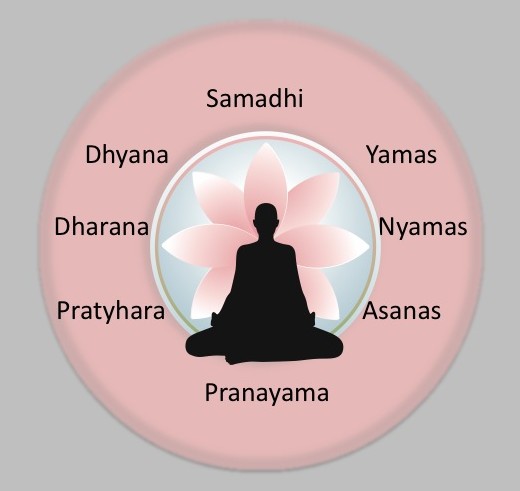
The eight limbs of Ashtanga Yoga are: 

1. Yama (self-restraint), 
2. Niyama (religious observances), 
3. Asana (posture), 
4. Pranayama (restraint of breath), 
5. Pratyahara (abstraction of senses), 
6. Dharana (concentration), 
7. Dhyana (meditation) 
8. Samadhi (super-conscious state).


As the fifth of the eight limbs, pratyahara occupies a central place. Some yogis include it among the outer aspects of yoga, others with the inner aspects. Both classifications are correct, for pratyahara is the key between the outer and inner aspects of yoga; it shows us how to move from one to the other.

It is not possible to move directly from asana to meditation. This requires jumping from the body to the mind, forgetting what lies between. To make this transition, the breath and senses, which link the body and mind, must be brought under control and developed properly. This is where pranayama and pratyahara come in. With pranayama we control our vital energies and impulses and with pratyahara we gain mastery over the unruly senses — both prerequisites to successful meditation.

What is Pratyahara?

The term is usually translated as "withdrawal from the senses," but much more is implied.

The term pratyahara is composed of two Sanskrit words, prati and ahara. Ahara means "food," or "anything we take into ourselves from the outside." Prati is a preposition meaning "against" or "away." Pratyahara means literally "control of ahara," or "gaining mastery over external influences." It is compared to a turtle withdrawing its limbs into its shell — the turtle’s shell is the mind and the senses are the limbs. The term is usually translated as "withdrawal from the senses," but much more is implied.

In yogic thought there are three levels of ahara, or food. The first is physical food that brings in the five elements necessary to nourish the body. The second is impressions, which bring in the subtle substances necessary to nourish the mind — the sensations of sound, touch, sight, taste, and smell. The third level of ahara is our associations, the people we hold at heart level who serve to nourish the soul and affect us with the gunas of sattva, rajas, and tamas.

Pratyahara is twofold. It involves withdrawal from wrong food, wrong impressions and wrong associations, while simultaneously opening up to right food, right impressions and right associations. 
We cannot control our mental impressions without right diet and right relationship, but pratyahara’s primary importance lies in control of sensory impressions which frees the mind to move within.

By withdrawing our awareness from negative impressions, pratyahara strengthens the mind’s powers of immunity. Just as a healthy body can resists toxins and pathogens, a healthy mind can ward off the negative sensory influences around it. If you are easily disturbed by the noise and turmoil of the environment around you, practice pratyahara. Without it, you will not be able to meditate.

There are four main forms of pratyahara: 

1. indriya-pratyahara — control of the senses 
2. prana- pratyahara - control of prana 
3. karma-pratyahara - control of action; and 
4. mano-pratyahara - withdrawal of mind from the senses. 

Each has its special methods.

1. Control of the Senses (Indriya-pratyahara)

Indriya-pratyahara, or control of the senses, is the most important form of pratyahara, although this is not something that we like to hear about in our mass media-oriented culture. Most of us suffer from sensory overload, the result of constant bombardment from television, radio, computers, newspapers, magazines, books — you name it. Our commercial society functions by stimulating our interest through the senses. We are constantly confronted with bright colors, loud noises and dramatic sensations. We have been raised on every sort of sensory indulgence; it is the main form of entertainment in our society.

The problem is that the senses, like untrained children, have their own will, which is largely instinctual in nature. They tell the mind what to do. If we don’t discipline them, they dominate us with their endless demands. We are so accustomed to ongoing sensory activity that we don’t know how to keep our minds quiet; we have become hostages of the world of the senses and its allurements. We run after what is appealing to the senses and forget the higher goals of life. For this reason, pratyahara is probably the most important limb of yoga for people today.

The old saying "the spirit is willing but the flesh is weak" applies to those of us who have not learned how to properly control our senses. Indriya-pratyahara gives us the tools to strengthen the spirit and reduce its dependency on the body. Such control is not suppression (which causes eventual revolt), but proper coordination and motivation.

Right Intake of Impressions

Pratyahara centers on the right intake of impressions. Most of us are careful about the food we eat and the company we keep, but we may not exercise the same discrimination about the impressions we take in from the senses. We accept impressions via the mass media that we would never allow in our personal lives. We let people into our houses through television and movies that we would never allow into our homes in real life! What kind of impressions do we take in every day? Can we expect that they will not have an effect on us? Strong sensations dull the mind, and a dull mind makes us act in ways that are insensitive, careless, or even violent.

According to Ayurveda, sensory impressions are the main food for the mind. The background of our mental field consists of our predominant sensory impressions. We see this when our mind reverts to the impressions of the last song we heard or the last movie we saw. Just as junk food makes the body toxic, junk impressions make the mind toxic. Junk food requires a lot of salt, sugar, or spices to make it palatable because it is largely dead food; similarly junk impressions require powerful dramatic impressions — sex and violence — to make us feel that they are real, because they are actually just colors projected on a screen.

We cannot ignore the role sensory impressions play in making us who we are, for they build up the subconscious and strengthen the tendencies latent within it. Trying to meditate without controlling our impressions pits our subconscious against us and prevents the development of inner peace and clarity.

Sensory Withdrawal

Fortunately we are not helpless before the barrage of sensory impressions. Pratyahara provides us many tools for managing them properly. Perhaps the simplest way to control our impressions is simply to cut them off, to spend some time apart from all sensory inputs. Just as the body benefits by fasting from food, so the mind benefits by fasting from impressions. This can be as simple as sitting to meditate with our eyes closed or taking a retreat somewhere free from the normal sensory bombardments, like at a mountain cabin. Also a "media fast," abstaining from television, radio, etc. can be a good practice to cleanse and rejuvenate the mind.
Yoni mudra
Yoni mudra is one of the most important pratyahara techniques for closing the senses. It involves using the fingers to block the sensory openings in the head — the eyes, ears, nostrils, and mouth — and allowing the attention and energy to move within. It is done for short periods of time when our prana is energized, such as immediately after practicing pranayama. (Naturally we should avoid closing the mouth and nose to the point at which we starve ourselves of oxygen.).

Another method of sense withdrawal is to keep our sense organs open but withdraw our attention from them. In this way we cease taking in impressions without actually closing off our sense organs. The most common method, shambhavi mudra, consists of sitting with the eyes open while directing the attention within, a technique used in several Buddhist systems of meditation as well. This redirection of the senses inward can be done with the other senses as well, particularly with the sense of hearing. It helps us control our mind even when the senses are functioning, as they are during the normal course of the day.

Focusing on Uniform Impressions

Another way to cleanse the mind and control the senses is to put our attention on a source of uniform impressions, such as gazing at the ocean or the blue sky. Just as the digestive system gets short-circuited by irregular eating habits and contrary food qualities, our ability to digest impressions can be deranged by jarring or excessive impressions. And just as improving our digestion may require going on a mono-diet, like the ayurvedic use of rice and mung beans (kicharee), so our mental digestion may require a diet of natural but homogeneous impressions. This technique is often helpful after a period of fasting from impressions.

Creating Positive Impressions

Another means of controlling the senses is to create positive, natural impressions. There are a number of ways to do this: meditating upon aspects of nature such as trees, flowers, or rocks, as well as visiting temples or other places of pilgrimage which are repositories of positive impressions and thoughts. Positive impressions can also be created by using incense, flowers, ghee lamps, altars, statues, and other artifacts of devotional worship.


Creating Inner Impressions

Another sensory withdrawal technique is to focus the mind on inner impressions, thus removing attention from external impressions. We can create our own inner impressions through the imagination or we can contact the subtle senses that come into play when the physical senses are quiet.

Visualization is the simplest means of creating inner impressions. In fact, most yogic meditation practices begin with some type of visualization, such as "seeing" a deity, a guru, or a beautiful setting in nature. More elaborate visualizations involve imagining deities and their worlds, or mentally performing rituals, such as offering imaginary flowers or gems to imagined deities. The artist absorbed in an inner landscape or the musician creating music are also performing inner visualizations. These are all forms of pratyahara because they clear the mental field of external impressions and create a positive inner impression to serve as the foundation of meditation. Preliminary visualizations are helpful for most forms of meditation and can be integrated into other spiritual practices as well.

Laya Yoga is the yoga of the inner sound and light current, in which we focus on subtle senses to withdraw us from the gross senses. This withdrawal into inner sound and light is a means of transforming the mind and is another form of indriya-pratyahara.

2. Control of the Prana (Prana-Pratyahara)

Control of the senses requires the development and control of prana because the senses follow prana (our vital energy). Unless our prana is strong we will not have the power to control the senses. If our prana is scattered or disturbed, our senses will also be scattered and disturbed.

Pranayama is a preparation for pratyahara. Prana is gathered in pranayama and withdrawn in pratyahara. Yogic texts describe methods of withdrawing prana from different parts of the body, starting with the toes and ending wherever we wish to fix our attention — the top of the head, the third eye, the heart or one of the other chakras.

Perhaps the best method of prana-pratyahara is to visualize the death process, in which the prana, or the life-force, withdraws from the body, shutting off all the senses from the feet to the head. Ramana Maharshi achieved Self-realization by doing this when he was a mere boy of seventeen. Before inquiring into the Self, he visualized his body as dead, withdrawing his prana into the mind and the mind into the heart. Without such complete and intense pratyahara, his meditative process would not have been successful.

3. Control of Action (Karma-Pratyahara)

We cannot control the sense organs without also controlling the motor organs (hands. feet, tonque, genitals). In fact the motor organs involve us directly in the external world. The impulses coming in through the senses get expressed through the motor organs and this drives us to further sensory involvement. Because desire is endless, happiness consists not in getting what we want, but in no longer needing anything from the external world.

Just as the right intake of impressions gives control of the sense organs, right work and right action gives control of the motor organs. This involves karma yoga — performing selfless service and making our life a sacred ritual. Karma-pratyahara can be performed by surrendering any thought of personal rewards for what we do, doing everything as service to God or to humanity.
The Bhagavad Gita says, "Your duty is to act, not to seek a reward for what you do." This is one kind of pratyahara. It also includes the practice of austerities that lead to control of the motor organs. For example, asana can be used to control the hands and feet, control which is needed when we sit quietly for extended periods of time.

Mastering pratyahara we can meditate even in the most noisy place
4. Withdrawal of the Mind (Mano-Pratyahara)

The yogis tell us that mind is the sixth sense organ and that it is responsible for coordinating all the other sense organs. We take in sensory impressions only where we place our mind’s attention. In a way we are always practicing pratyahara. The mind’s attention is limited and we give attention to one sensory impression by withdrawing the mind from other impressions. Wherever we place our attention, we naturally overlook other things.

We control our senses by withdrawing our mind’s attention from them. According to the Yoga Sutras II.54: "When the senses do not conform with their own objects but imitate the nature of the mind, that is pratyahara." More specifically, it is mano-pratyahara — withdrawing the senses from their objects and directing them inward to the nature of the mind, which is formless. Vyasa’s commentary on the Yoga Sutra notes that the mind is like the queen bee and the senses are the worker bees. Wherever the queen bee goes, all the other bees must follow. Thus mano-pratyahara is less about controlling the senses than about controlling the mind, for when the mind is controlled, the senses are automatically controlled.

We can practice mano-pratyahara by consciously withdrawing our attention from unwholesome impressions whenever they arise. This is the highest form of pratyahara and the most difficult; if we have not gained proficiency in controlling the senses, motor organs, and pranas, it is unlikely to work. Like wild animals, prana and the senses can easily overcome a weak mind, so it is usually better to start first with more practical methods of pratyahara.

David Frawley
Pratyahara and the Other Limbs of Yoga

Pratyahara is related to all the limbs of yoga. All of the other limbs — from asana to samadhi — contain aspects of pratyahara. For example, in the sitting poses, which are the most important aspect of asana, both the sensory and motor organs are controlled. Pranayama contains an element of pratyahara as we draw our attention inward through the breath. Yama and niyama contain various principles and practices, like non-violence and contentment, that help us control the senses. In other words, pratyahara provides the foundation for the higher practices of yoga and is the basis for meditation. It follows pranayama (or control of prana) and, by linking prana with the mind, takes it out of the sphere of the body.

Pratyahara is also linked with dharana. In pratyahara we withdraw our attention from ordinary distractions. In dharana we consciously focus that attention on a particular object, such as a mantra. Pratyahara is the negative and dharana the positive aspect of the same basic function.

Many of us find that even after years of meditation practice we have not achieved all that we expected. Trying to practice meditation without some degree of pratyahara is like trying to gather water in a leaky vessel. No matter how much water we bring in, it flows out at the same rate. The senses are like holes in the vessel of the mind. Unless they are sealed, the mind cannot hold the nectar of truth. Anyone whose periods of meditation alternate with periods of sensory indulgence is in need of pratyahara.

Pratyahara offers many methods of preparing the mind for meditation. It also helps us avoid environmental disturbances that are the source of psychological pain. Pratyahara is a marvelous tool for taking control of our lives and opening up to our inner being. It is no wonder some great yogis have called it "the most important limb of yoga." We should all remember to include it in our practice.

Pratyahara and Ayurveda

Pratyahara, as right management of the mind and senses, is essential and good for all constitutional types (Vata-Pitta-Kapha). It is the most important factor for mental nutrition.

Vata types. However, it is most essential for those with a vata constitution who tend towards imbalanced or excessive sensory and mental activity. All vata types should practice some form of pratyahara daily. Their restless vata distracts the senses, disturbs the motor organs and prana, and makes the mind restless. Pratyahara reverse harmful vata and turns it into a positive force of prana.

Kapha types, on the other hand, generally suffer from too little activity, including on a sensory level. They may slip into tamasic patterns of being lazy, watching television or sitting around the house. They need more mental stimulation and benefit from sensory activity of a higher nature, like visualizations of various types.

Pitta types generally have more control of the senses than the others and incline toward martial-type activities in which they discipline the body and the senses. They need to practice pratyahara as a means of relaxing the personal will and letting the divine will work through them.

Pratyahara and Disease

Ayurveda recognizes that the inappropriate use of the senses is one of the main causes of disease. All mental disease is connected with the intake of unwholesome impressions. Pratyahara therefore is an important first step in treating all mental disorders. Similarly it is very helpful in treating nervous system disorders, particularly those that arise through hyperactivity. Most of the time we overly express our emotions, which loses tremendous energy. Pratyahara teaches us to hold our energy within and not disperse it unnecessarily. This conserved energy can be drawn upon for creative, spiritual or healing purposes as needed and can provide the extra power to do the things that are really important to us.

Physical disease mainly arises from taking in unwholesome food. Pratyahara affords us control of the senses so that we do not crave wrong food. When the senses are controlled, everything is controlled and no wrong or artificial cravings can arise. That is why Ayurveda emphasizes right use of the senses as one of the most important factors in right living and disease prevention.

Peace, Love, Harmony

Friday, July 24, 2015

What is enlightenment and how we can achieve it? by Atman Nityananda


What is enlightenment and how we can achieve it?
by Atman Nityananda

When the mind becomes pure and sattvic, that is to say free from egoic energies, rajas and tamas gunas, awakens and merges with its source, consciousness. In this state of total union man becomes God and God becomes man, the two become a perfect unity in the deepest sense. This is enlightenment, this is liberation, this is the divinization (apotheosis) of human being.

The liberation of the mind of egoic energies and self-realization neither happen by chance nor are products of inertia.

The idea that we can dissolve these energies and achieve enlightenment doing nothing is a misconception. Neither the body can survive by doing nothing. It is necessary to put food in our mouth, chew it and swallow it.

Changing erroneous beliefs is an important step to dissolve the egoic energies but it is not enough to get it.

Of course, spirituality does not mean accumulating knowledge in the mind or acquire something from outside.

Spirituality is something 100% practical. It is the purification and transformation of the mind (thinking mind, emotional mind and intellect), and the  purification and transformation of prana and sexual energy.

Besides purification, it is necessary to create balance and harmony in all levels of our existence. It is necessary to increase the sattva guna, the ojas, the prana and the tejas and transform the sexual energy. It is necessary to control the senses and the mind, to stop the mind wander and identify with thoughts, emotions, objects, body and stop forgetting our Beingness.

It is also true that there is not a spiritual path for all. There are actually as many ways as humans. Each one according to his maturity, his mental constitution, his experiences and his needs follows its own unique way.

In short, to achieve enlightenment it is necessary follow a sattvic life oriented in spirituality, not in theory but in practice.
It takes a lot of consistent practice, determination, sincerity, courage, faith, self-confidence, dedication and most of all a burning longing to realize the truth.

Peace, Love, Harmony

Friday, February 28, 2014

Spiritual Vibrations And Aura - Sri Swami Sivananda


Spiritual Vibrations And Aura


Vibration means motion. The Lord willed and there was a vibration. The world was projected. The sound OM emanated. The three qualities viz., Sattva, Rajas and Tamas differentiated themselves from the unmanifested. There was a vibration in the ether and the other four elements came forth. Through the process of quintuplication or mixing up of the elements the phenomenal world came into being. 

The whole universe is full of molecular vibrations. Any word or Mantra uttered silently or forcibly produces molecular waves, gross, subtle, or more subtle. These waves spread throughout the universe. It is said that the radiowaves move round the world seven times a second.

Everything in this world, both visible and invisible, constantly vibrates. All particles of matter are in a state of vibration. From the tiniest atom to the mightiest planet all things are in a state of vibration. The atoms of the human body are in constant vibration. Different rates of vibration balanced in the cosmic rhythm produce, before us the magnanimous world. Matter is being acted upon by energy and innumerable forms are produced. Forms break down incessantly and new forms come into being. There is nothing in absolute rest in nature. The air is ever vibrating. Rivers are ever flowing. The earth is ever revolving. The stars are ever moving. Forms come and go but the reality that lies behind these forms is unchangeable.

Earthquakes, landslides, volcanic eruptions, thunder, lightning and so forth, are the outcome of vibration. Electricity and magnetism are vibrations only. Music is vibration. If various kinds of musical instruments are kept in a room, properly tuned, and if one instrument is kept in vibration, all other instruments also will vibrate themselves. Music produces harmonious vibrations in the mind and soothes the nerves and the mind.

Every thought, every word and every physical action produces a molecular vibration in the atmosphere which affect every object. Any evil thought, evil word or evil action immediately creates a bad vibration in the atmosphere and does harm too many persons. Conversely any good thought, good word or good action immediately produces a good vibration and does good to many persons.

Telepathy is thought-vibration. The mind is constantly vibrating. The mind is acted upon by the psychic Prana or subtle energy and various thoughtforms are produced. Thought vibrates. The trained Yogi can send a thought in the ether to any distance he likes. Thoughts are separated from each other by different rates of vibration. Wherever and whenever any work is done, a motion or vibration is caused; wherever and whenever a motion or vibration is produced a sound is produced. The sound of the first motion of the equipoised Nature in the act of creation of Pranava or OM. The Lord willed at the end of the dissolution (Maha-Pralaya): “May I become many.” There arose a motion or vibration in the unmanifested Nature (Prakriti). It is Omkara or Pranava-Nada.

There must be harmony or concord in vibration. Then there is peace. There must be rhythm in vibration. Then there is order. There is rhythm in the systolic and diastolic movements of the heart during contraction and dilation. So there is order in internal harmony in the circulation of blood. Man enjoys good health. There is rhythm in the vibration or the movement of the lungs. So man is hale and hearty. If there is a disturbance of the rhythm in the motion of either the heart or the lungs, then man gets incurable diseases of the heart and the lungs and passes away soon.

Some vibrations can be felt or detected by ordinary physical and sensory means. When you shake hands with another man, a distinct vibration can be felt passing from one hand to the other. A man who is both blind and deaf can easily know one individual from another because no two persons have the same vibrations.

You will observe a definite rhythm in all vibrations. The law of rhythm operates in the working of this human machine. There is rhythm in every movement in this universe. Inhalation and exhalation, the systole and diastole of the heart, the ebb tide and the flood tide in the sea, the movements of the stars and the planets in the firmament, days and nights, seasons and monsoons—all follow definite rhythmic laws.

Everything has a different rate of vibration. Various sorts of waves are passing about in this universe. Some waves oppose each other and bring about discord, disharmony and rupture. Some other waves move harmoniously side by side. Then there is peace and harmony. You must know how to harmonise your physical and mental vibrations with those without. Then only you can be really happy. If you can place yourself in tune with the vibrations of another man, you can really understand him. If you have immense liking for another man, it means your vibrations are in tune with the vibrations of that man. People of similar vibrations are united by friendship. If the vibrations of one man strike against those of another, they cannot be united. Hatred, prejudice, dislike and jealousy will result.

The five sheaths  and vibrations

 The five sheaths should vibrate harmoniously (the five sheaths of the human body are: Food sheath, Vital sheath Mental sheath, Intellectual sheath and Blissful sheath. These sheaths have concealed the Atman or God within. You will have to pierce through these five sheaths, if you want to see God face to face). Then only you will have good health and a sound mind. Disease is nothing but disharmony in the vibrations of the human body. Asanas, Pranayama, recitation of the Names of the Lord, singing hymns and prayer, study of philosophical books will produce harmonious vibrations in the physical, vital, mental, intellectual and blissful sheaths respectively. Then only you can practice meditation nicely.

Colours have vibrations. Some colours are soothing and pleasing, while others are very annoying and irritating. Green colour is very pleasing. Colours that irritate clash in vibrations with those of the receptive subject.

The vibrations set up by the pronunciation of the monosyllable OM are so powerful that they would bring the strongest building to the ground, if the pronunciation is persistently repeated in the right way.

A note on the violin, if sounded repeatedly in rhythm, will generate vibrations which will in time destroy a bridge. The vibrations caused by the rhythmic movements of the soldiers on a bridge may bring down the bridge. A Yogi practices rhythmic breathing to absorb Prana and develop will. His whole system vibrates harmoniously. There is perfect harmony in the vibrations of his mind. Through rhythmic breathing he transmits an increased current of Prana or nerve-force to any part of the body for stimulating and invigorating it. He renovates and vivifies the whole system and heals any diseased part by supplying an increased quantity of Prana. He transmits powerful thoughts to others to heal them of their disease and attracts countless persons like a powerful magnet. He becomes a mighty centre of spiritual force.

Why do the places of pilgrimage attract people? Because Saints, Mahatmas, Yogins and Sannyasins had done their Tapas and meditation in these places. In other words, these places have been saturated with pure vibrations. That is the reason why the pilgrims feel inexpressible joy, peace and strength in these places. The powerful spiritual thoughts of those spiritual giants are still floating in the atmosphere. They exercise a benign and soothing influence on their minds. Places like Gangotri, Uttarkasi, Badrinarayan, Manasasarovar, Mount Kailas, Rishikesh, Amarnath, and Kedarnath in India are filled with holy vibrations of sages and Rishis of yore who did severe Tapas there, and are therefore best suited and highly beneficial to aspirants for the practice of meditation. Aspirants can enter into the meditative mood in these places without any effort.

DELPHI - GREECE
Even some places in the plains have their own good vibrations. So some people feel happy in some localities but not in others. Happy surroundings with harmonious vibrations help a man to turn out good, substantial work, whereas unpleasant surroundings with morbid vibrations retard the work of man.

The elements differ, not in substance, but only in the rate of vibrations. The substance in ice, water, steam and vapour is the same. Each contains two atoms of hydrogen and one atom of oxygen, but the rate of vibration differs in ice, water and steam.
If you are not powerful to protect yourself, vicious thoughts of others will affect you, when you live with them in the same room. Create a protective magnetic aura around you. Feel and imagine that a protective shell has been actually formed around your body. Practise Pranayama and meditation regularly. No wrong vibrations from without can affect you. Your body and mind will be proof against undesirable vibrations.

If you have a pure mind, if you are free from prejudice, intolerance, dislike, hatred and greed, if you possess love, sympathy, mercy and unbiased neutral state of consciousness, you will be able to find out at once what sort of vibrations people around you radiate. You will develop a new spiritual sense or Yogic faculty.

Do not be carried away by bubbling emotions. Bring them under your control. Use your reason. Keep a balance between reason and feeling. Develop both the head and the heart. Then only there will be harmonious vibrations inside. Regular meditation will pave a long way in the attainment of the balanced state.

If you live in the company of a developed saint, you will be immensely benefited by his wonderfully powerful spiritual vibrations and aura. Even a rank materialist and a confirmed atheist will feel the presence of God in his company.

Man draws his Prana from the air he breathes, from the food he eats, and from the beverage he drinks. You can imbibe the energy from the solar energy also, if you know the Yogic technique. Deficiency of Prana induces weakness, low vitality, languor and inertia. A sufficient supply of Prana makes a man nimble, active and energetic. He has full life in every limb. He jumps and dances in joy.

The aura is in fact an emanation or radiation of life-force from the vehicles or sheaths of man. The aura can be seen only by the Yogi who has inner Yogic sight or clairvoyant vision. Each sheath radiates its own particular aura with a particular rate of vibration. So there is no interference. The auras of the different sheaths interpenetrate each other.

The aura that emanates from the physical body is gross. This is known as the “Health Aura.” Its colour is faintly brilliant violet-grey or bluish-white mist. It is almost colourless. It is ovoid in shape. It extends from the body to distance of 2 or 3 feet. The “Health Aura” is striated by countless fine lines which project from the body evenly like stiff bristles. In perfect health these lines are separate and parallel. They are in an orderly manner. In poor health or diseased condition they droop down like the soft hair of an animal or the stems of faded flowers. The lines lie about in all directions in a state of confusion. When a sick person recovers from his illness, the radiation of the magnetic form of vital energy slowly begins and the lines of the “Health Aura” are brought back into order. They again become straight and parallel.

Just as blood flows along arteries and veins, so also the vital force flows along the nerves in a constant stream. This vital force is poured upon us from the sun, which is the source of life. He who has abundant vital force is a healthy man. He radiates abundant “Health Aura’’ and brings joy, strength, health and vitality to countless persons with whom he comes in contact. He becomes a centre of energy. The vital force constantly radiates from his body in all directions. A mesmeriser actually transmits his vital force through magnetic “passes” to the subject. It is through the help of this vital force that he practices various sorts of healing. He who is endowed with abundant “Health Aura” and vital force cannot succumb easily to any disease. The “Health Aura” and the vital force act as powerful germicides. They prevent the entry of germs into the body. Even if he succumbs to any kind of disease, he will tide over the crisis very easily in a short time on account of his high standard of health and vitality. He will convalesce very quickly.

On the contrary a weak man who is deficient in vital force or Prana absorbs the vitality or Prana of a strong man with whom he happens to come in contact. If you feel weak, uncomfortable and weary after an interview with any weak person, remember that the weak man has depleted your energy to some extent. He has acted the part of a vampire. You might have all experienced this in your daily life.

It is quite possible by an effort of the will to put a check to the radiation of vitality from one’s body by building a shell around the body. This will prevent the entry of disease-causing germs into the body. Further the body will also be impervious to any kind of astral elemental influence from without. You may render yourself immune from any form of vampirism. There will not be any leakage of life-force from your body. The depressing influence of the base thoughts of low-minded people will be obviated. You can live quite comfortably with them in the same room.


PROTECTING AURIC SHELL
This is the way to develop a protecting auric shell: Sit at ease. Retain the breath for a half or one minute. Imagine that you are surrounded by a shell of thought-aura to a distance of 2 or 3 feet from the body on all sides. Form a clear mental image. Repeat this process 10 to 15 times. Repeat OM mentally, when you retain the breath.

The spiritual aura is of yellow. It centres round the heads of Saints, Sages, Rishis, Prophets, and Yogins. This can sometimes be seen by ordinary persons with naked eyes, when the saint stands on the pulpit to preach. The yellow glow is intensified, when the intellectual faculties are put to an unusual strain. The face of the saint will present a glowing appearance. This is the nimbus or glory of a saint. This is the halo shown in pictures of spiritual leaders. The magnetic spiritual aura of Lord Buddha extended to a distance of 3 miles all around. Those who came within the compass of 3 miles were subdued. They became his disciples. The magnetic divine aura of Yogi Kaka Bhusunda radiated to a distance of eight miles! The spiritual aura of even a first-class aspirant radiates to a distance of 400 yards. You can also develop this spiritual aura by regular and continued practice of meditation with zeal and persistence. 

Emotions and colors

Human aura has different colours in different people according to their growth and development physically, mentally, morally and spiritually, and each colour has got its own meaning and significance. The meanings of some of these colours are set below: 

Scarlet represents anger.

Crimson represents love.

Rose represents love.

Black denotes hatred and malice.

Red on a black background indicates anger.

Red on a green background shows jealousy.

Red independent of a background denotes “righteous indignation.”

Lurid Sanguinary Red indicates sensuality.

Grey represents selfishness when the colour is bright.

Grey represents fear when its shade is like a dead body.

Green denotes jealousy when the colour is dirty.

Red Flashes on a green background signifies anger mingled with jealousy.

Slimy Green signifies deceit and cunning.

Green when bright indicates tolerance, tact, adaptability, politeness and intelligence.

Orange when bright denotes pride and ambition.

Yellow denotes intellectuality. It is a good colour. When the intellect runs into low channels, the yellow is deep and dull. When it is directed towards higher things, it becomes brilliantly golden or prim-rose yellow.

Blue when dark and clear denotes religious feeling. When the blue amounts to a rich violet, it represents highest religious thought and feeling.

Blue when light and luminous represents spirituality.

White when pure and effulgent represents the Spirit or Brahman or GOD.
  

Dear friend! Surround yourself with harmonious vibrations within and without. Regular meditation will help you in attaining this end. Carry with you wherever you may go, vibrations of power, strength, joy, bliss, peace, kindness, love, mercy and sympathy. Absorb all good vibrations. Dispel all discordant vibrations. Learn to absorb the vibrations of great sages of yore which are floating in the ethereal space. Be in tune with the vibrations of the living liberated sages. They will all back you up. May the vibrations of peace and joy flow through your eyes, face, tongue, hands, feet and skin! May whoever comes in contact with you feel this! May the Eternal, Immortal Spirit guide you in your attainment of Self-realisation by developing harmonious vibrations! 
Om Peace! Peace! Peace!